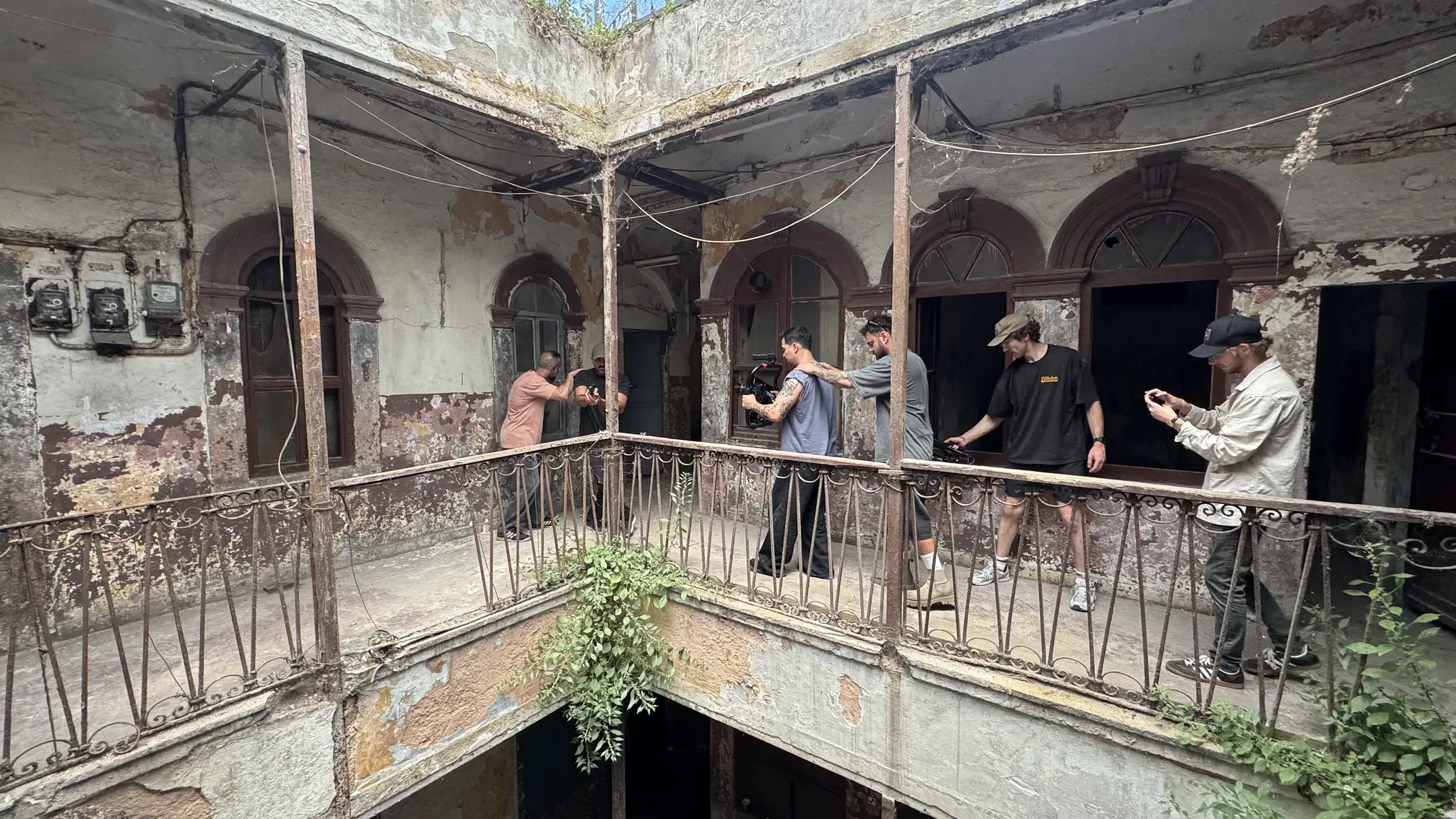
How We Delivered an Ambitious 11-Day American Mini-Series Shoot in Istanbul
Line production, fixer services, permits, historical locations, equipment, crew and logistics for a planned three-episode series intended for Netflix.
A practical case study of how a small international team completed an ambitious 11-day shoot across more than 15 Istanbul locations with controlled costs, reliable local logistics and strong production value.
Project Overview
This project brought an American independent production team to Istanbul to film the pilot episode and establish the production foundation for a planned three-episode mini-series intended for Netflix. I worked as the local Line Producer and Fixer, taking responsibility for turning the creative brief and script into a realistic, safe and cost-controlled production plan in Türkiye.
The schedule was intensive: 11 shooting days, more than 15 filming locations, multiple historical environments, script-specific picture vehicles, international crew movements, local equipment packages and daily production requirements that changed quickly. The budget was independent and tightly controlled, but the visual ambition was much larger. Our job was to make every dollar visible on screen without compromising the essentials of safety, legality, timing or quality.
The Challenge: International Expectations on an Independent Budget
International productions often arrive in Türkiye with two priorities that can appear to conflict: they want cinematic scale and production value, but they also need the local plan to remain efficient. In this case, every decision had to serve both the story and the budget. A location could not simply look right; it had to be permit-ready, reachable, controllable and practical for camera, lighting, sound, transport and crew movement.
As Line Producer, I built the local production strategy around the script. As Fixer, I connected the visiting team with the right Turkish authorities, location owners, rental houses, crew members, drivers, accommodation partners, caterers and specialist suppliers. These two roles worked together continuously. Creative choices were checked against real costs, access conditions and schedule impact before becoming part of the final plan.
From Script Breakdown to an Executable Istanbul Plan
Pre-production began with a detailed script breakdown. Each scene was reviewed for location type, time of day, cast movement, props, vehicles, wardrobe support, technical needs, permit risk and travel time. We then grouped scenes geographically to reduce company moves and protect shooting time.
This process is especially important in Istanbul. The city offers extraordinary visual variety, but traffic, pedestrian density, historical-site regulations and limited loading access can affect even a simple setup. The production plan therefore included realistic call times, equipment access routes, parking and holding options, meal timing, weather alternatives and backup locations. The aim was not only to create a schedule that looked good on paper, but one that could actually survive a real shooting day.
Film Permits and Access to Historical Locations
One of the main responsibilities was coordinating filming permissions. Istanbul contains municipal areas, privately managed properties, protected heritage zones, active commercial spaces and culturally sensitive sites. Each category may require a different approval path, supporting documentation and operational approach.
We prepared the required production information, communicated the intended footprint of the shoot and coordinated access conditions with the relevant parties. Historical and high-traffic sites demanded particular care. Filming around locations such as the Grand Bazaar requires careful timing, a reduced technical footprint, respect for shopkeepers and visitors, and a plan that protects both the production and the daily life of the location.
Permit work is not only paperwork. It is also expectation management. The local producer must explain what the crew will bring, how long the setup will last, whether streets or entrances need control, what power and lighting are involved, and how the location will be restored after filming.
Location Scouting Across More Than 15 Sites
The script required a wide range of looks: historical Istanbul, active streets, interior spaces, practical production bases and visually iconic backgrounds. We scouted, verified and coordinated more than 15 filming locations across the city.
Every location was assessed creatively and operationally. We checked camera angles, natural light, sound conditions, public traffic, electricity, generator access, green rooms, toilets, catering space, vehicle access, security needs and the distance from the previous scene. Where a location was visually perfect but operationally difficult, we developed a smaller footprint or found a matching alternative that protected the scene without creating unnecessary cost.
Picture Vehicles, Props and Script-Specific Requirements
Several scenes depended on vehicles and props that could not be replaced with generic options. We sourced picture vehicles that matched the period, character and visual language of the script, then coordinated availability, condition checks, drivers, transport and on-set timing.
Props and specialist requirements were handled with the same approach: identify the exact dramatic function, source locally where possible, customize when necessary and always prepare a backup. This reduced international freight costs and avoided delays caused by customs or last-minute replacements.
Camera, Lighting and Production Equipment Rental
The visiting team required a reliable local camera and lighting package that could support the intended look while remaining appropriate for fast location work. We coordinated equipment rental through established suppliers in Istanbul, aligning the package with the cinematographer’s technical preferences, the location limitations and the available crew.
The rental process included availability checks, package comparison, insurance and responsibility terms, prep and testing time, transport cases, expendables, batteries, power distribution and contingency items. The goal was not to rent the largest package, but the correct package: equipment that could move quickly, perform reliably and deliver the desired image without adding unnecessary labor or transport.
Local Crew Coordination
A strong local crew is one of the biggest advantages of shooting in Türkiye. For this project, we coordinated experienced Turkish production personnel and technical support according to the scale of each day. The local team helped the American department heads work efficiently within Istanbul’s practical conditions.
Clear bilingual communication was essential. Call sheets, location notes, transport details and last-minute changes needed to be understood quickly by international and local crew. My role was to keep the production aligned, solve problems before they reached the set and make sure each supplier and crew member knew exactly when and where they were needed.
Airport Transfers, Local Transport and Daily Logistics
Production logistics began before the first shooting day. We coordinated airport pickups, accommodation arrivals, local SIM and communication needs, equipment movements and transport for crew members. During production, vehicle plans were adjusted daily according to call times, location access, cast requirements and equipment volume.
Istanbul transport planning cannot rely only on distance. A short route can take significantly longer at peak hours, and historical districts may have restricted access or no nearby parking. We built buffers into critical movements, selected practical pickup points and used local knowledge to avoid losing valuable camera time.
Accommodation, Food and Catering
Accommodation was selected not only by room price, but by its relationship to the shooting map. Keeping the team in a practical area reduced daily transfer time, driver hours and fatigue. We coordinated reservations, check-in requirements and production communication with the accommodation provider.
Catering and craft service were planned around the pace of an international set. Meals needed to arrive on time, remain suitable for the working conditions and account for dietary preferences. On historical or compact locations, we used flexible meal and holding solutions so that food service did not block the public or interrupt the shooting footprint.
Managing an Intensive 11-Day Shoot
Over 11 days, the production moved through a dense schedule with frequent company moves and changing operational needs. Each day required coordination between locations, transport, equipment, crew, catering, permits, props and vehicles. The work of a line producer is often invisible when everything goes well: the cars arrive before call, the location opens on time, the equipment is ready, lunch appears before the crew loses energy and the next location is already expecting the company.
When conditions changed, we responded quickly. The solution was rarely to spend more money. More often it was to change the order, reduce the footprint, renegotiate access, combine resources or use a local alternative. This is where an experienced fixer adds real production value.
Making Every Dollar Visible on Screen
The central production objective was to create a result that looked more expensive than the available budget. We achieved this by prioritizing the elements that the audience would actually see: strong locations, the right vehicles, controlled art details, dependable camera and lighting support, and enough time for the director and cinematographer to work.
Cost control did not mean choosing the cheapest supplier in every category. It meant choosing the option with the best total value. A slightly more experienced driver can save an hour. A well-prepared location can prevent overtime. A correctly sized equipment package can reduce trucks and crew. A local prop solution can remove freight and customs costs. These decisions accumulate into a smoother shoot and a stronger image.
Why Istanbul and Türkiye Work for International Productions
Istanbul can represent many worlds within a relatively compact production base. Ottoman, Byzantine, European, Mediterranean, Middle Eastern and modern metropolitan environments exist side by side. Beyond Istanbul, Türkiye offers coastlines, mountains, villages, industrial landscapes, ancient cities and contemporary architecture.
The country also has experienced crews, established rental houses, skilled production designers, costume resources, diverse casting and competitive production costs. The key is local planning. International teams gain the most from Türkiye when their local producer understands both the creative language of filmmaking and the practical language of permits, suppliers, transport and negotiation.
Production Support for Projects of Every Scale
This project was an American mini-series, but the same production principles apply to feature films, television, branded content, commercials, documentaries, music videos, interviews and small run-and-gun shoots. A one-person documentary crew may need a fixer, permit support, a driver and a translator. A full-scale drama may require complete line production, payroll, casting, equipment, art department, construction, transport and multi-city coordination.
Through Behrouz.me, I provide flexible production support in Istanbul and across Türkiye. Services can be built around the actual needs of the project rather than forcing every production into the same package.
Project at a Glance
Format: Pilot episode and production foundation for a planned three-episode American mini-series intended for Netflix.
Role: Behrouz Bagheri - Line Producer and Fixer in Türkiye.
Production period: 11 shooting days.
Locations: More than 15 locations across Istanbul.
Core services: permits, location scouting, historical-site coordination, camera and lighting rental, picture vehicles, props, local crew, accommodation, catering, airport transfers, local transport and daily production management.
Production goal: maximize on-screen value while protecting the independent budget.
Frequently Asked Questions
What does a line producer in Türkiye manage? A line producer manages the practical and financial execution of the shoot, including budgeting, scheduling, crew, equipment, locations, transport, suppliers and day-to-day production operations.
What does a fixer in Istanbul do? A fixer connects an international production with trusted local resources, translates practical and cultural requirements, assists with permits and access, and solves location, logistics and communication problems.
Can international productions film in the Grand Bazaar? Filming may be possible depending on the exact area, timing, crew size, equipment footprint and required permissions. Early planning and a respectful, low-impact approach are essential.
Can you arrange camera and lighting rental in Istanbul? Yes. Packages can be sourced from established Turkish rental houses and matched to the cinematographer’s technical requirements, insurance needs and budget.
Do you support small documentary or run-and-gun crews? Yes. Support can be scaled from a fixer, driver, translator and permit assistance to full line production and crew services.
Do you work outside Istanbul? Yes. Production services can be coordinated across Türkiye, including location research, local crew, transport, accommodation and permits.
Bring Your Production to Türkiye
Planning a film, series, commercial, documentary, branded-content shoot or small international production in Türkiye? I can help you build a realistic local plan, secure the right resources and protect both your schedule and budget.
Explore production services, projects and verified filming locations at www.behrouz.me.